Purim and the Holocaust

A Necessary Foreword
I intended to write this post on Purim. But I did not. And now the esteemed Rabbi Kochubievsky posed me a question about how I would explain such two delicate topics as Haman's verdict to annihilate the entire Jewish people, and the Holocaust.
Perhaps Rabbi Kochubievsky himself posed the questions about Purim and the Holocaust as two separate difficult questions. But in my view this is precisely one question. Purim offers a way to explain the Holocaust, because if we analyze the situation in which Haman's decree came about, we can put forward a hypothesis that a certain pattern is discernible here, and extrapolate the conclusions to the subsequent and present-day situation.
To appreciate how intellectually and morally dangerous this topic is, one must cite one of the most influential Jewish religious authorities of the post-Holocaust period — the Lubavitcher Rebbe (Sefer HaSichot 5751 Vol.1 p.233):
"There is absolutely no rationalistic explanation for the Holocaust except for the fact that it was a Divine decree … why it happened is above human comprehension – but it is definitely not because of punishment for sin"
(as cited in Belief After the Holocaust // chabad.org)
So — yes, I understand that constructing hypotheses about what, in the opinion of a great sage and righteous man, lies beyond the limits of human comprehension, is a path on which it is difficult to avoid errors. But being aware of how intellectually and morally dangerous this undertaking is, I consider it necessary, and moreover — the refusal to undertake it far more dangerous.
We will return to the Lubavitcher Rebbe's position, which is of great importance here, and will try to understand why it is as it is, not limiting ourselves merely to the fact that it appears epistemologically unsatisfying for a person who considers understanding the designs of the Almighty a paramount task for anyone who thinks from the premise of His existence.
Purim
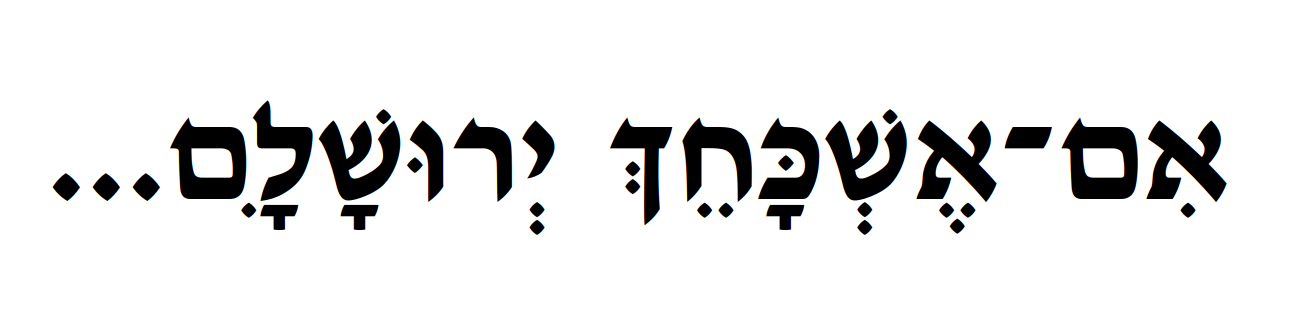
Let us then consider the situation in which the events of Purim occurred. The Jews were in the exile known as the Babylonian captivity. It is precisely this exile that the famous Psalm 137 (by the Masoretic numbering), "By the rivers of Babylon", speaks of — the psalm in which this formula appeared:
אִם־אֶשְׁכָּחֵךְ יְרוּשָׁלָ͏ִם תִּשְׁכַּח יְמִינִי תִּדְבַּק־לְשׁוֹנִי לְחִכִּי אִם־לֹא אֶזְכְּרֵכִי אִם־לֹא אַעֲלֶה אֶת־יְרוּשָׁלַ͏ִם עַל רֹאשׁ שִׂמְחָתִי
If I forget thee, O Jerusalem, let my right hand forget her cunning. Let my tongue cleave to the roof of my mouth, if I remember thee not; if I set not Jerusalem above my chiefest joy.
The Persian king Cyrus (כוֹרֶשׁ) issues a decree permitting the Jews to return to Jerusalem and begin rebuilding the Temple (Ezra 1:1-4):
מִי-בָכֶם מִכָּל-עַמּוֹ, יְהִי אֱלֹהָיו עִמּוֹ, וְיַעַל, לִירוּשָׁלִַם אֲשֶׁר בִּיהוּדָה; וְיִבֶן, אֶת-בֵּית יְהוָה אֱלֹהֵי יִשְׂרָאֵל--הוּא הָאֱלֹהִים, אֲשֶׁר בִּירוּשָׁלִָם.
Whosoever there is among you of all His people--his God be with him--let him go up to Jerusalem, which is in Judah, and build the house of the LORD, the God of Israel, He is the God who is in Jerusalem.
A portion of the people returned with Zerubbabel, but due to the difficulties that arose, the rebuilding of the Temple was suspended.
The greater part of the Jews, however, instead of setting out for a ruined country unfit for habitation, remained in the comfortable exile, where all the benefits of civilization available in those times were at hand. Highly telling are the names of the main characters of the Scroll of Esther: Esther herself — whose name derives from the Babylonian goddess Ishtar — and Mordechai, a name that means "the god Marduk lives" — the chief deity of the Babylonian pantheon; as well as the fact that the king, whose wife Esther was, did not know she was Jewish — that is, outwardly her belonging to the people was in no way manifest (observance of customs, fulfillment of commandments).
And at this very time, the country into which the Jews had already begun so comfortably to integrate suddenly becomes hostile. Haman arranges the issuance of a decree by King Ahasuerus for the annihilation of the Jewish people. But his wife — Queen Esther remembers that she is Jewish, and reveals this to the king, who until that moment had not even known it. In the end, the Jewish people, being one step from annihilation, survive; the Jews remember that they are Jews. And already after Ahasuerus, King Dareyavesh (possibly Darius II) — Esther's son (according to the traditional and most logical interpretation) — issues a new instruction for the Jews to return and rebuild the Temple, and the majority of the Jews return (the aliyah of Ezra) and rebuild the Temple in Jerusalem.
What happens overall: the people of Israel, attempting to evade their mission and even to forget their calling, find themselves on the brink of destruction, which pushes them back toward the mission destined for this people.
The Holocaust
In this history we see a painfully familiar pattern, but now repeated with intensified cruelty.
At the beginning of this history, the head of the Persian Empire, Cyrus, is paralleled by the monarch of another great empire — King George V. On November 2, 1917, British Foreign Secretary Arthur Balfour publishes the Declaration:
His Majesty's Government view with favour the establishment in Palestine of a national home for the Jewish people, and will use their best endeavors to facilitate the achievement of this object.
And on July 24, 1922, the League of Nations confirms His Britannic Majesty as the Mandatory for Palestine for the realization of the objectives set forth in the Balfour Declaration.
Just as after the decree of Cyrus, a portion of the Jews makes for Palestine. And just as with Zerubbabel, the process encounters certain difficulties and obstacles.
But the greater part of the Jews decides to go nowhere and to rebuild nothing. Moreover, this is the virtually unanimous position of the people's religious leaders: there is no need to go anywhere until the Mashiach comes. Rav Kook writes about the beginning of the Geulah, but the majority of rabbis do not follow him.
The Jews, who for nearly two thousand years had been repeating the oath — "If I forget thee, O Jerusalem, let my right hand forget her cunning; let my tongue cleave to the roof of my mouth" — do not stream en masse to Jerusalem.
Moreover, the religious leaders invoke the "Three Oaths" from the Talmud (Ketubot 111a), which prohibit a mass return to the Land of Israel.
That is, they did not simply fail to go and rebuild the Temple — they said "our religion forbids us to do so."
All the while, they continued to celebrate Purim — without drawing any parallels.
And then the unbelievable happened: the most (or, at the very least, one of the most) rational, pragmatic, and educated nation in Europe goes insane. A paranoiac comes to power who considers it an indisputable fact that the Jews had deliberately been bringing Black people into Germany "with the same vile purpose — through miscegenation to inflict as much harm as possible upon the hated white race" (see Mein Kampf on the Yad Vashem website), and suchlike. And millions fanatically follow him.
Just as Haman, the Nazis devise a plan for the "Final Solution to the Jewish Question" — through the annihilation of the Jews.
A conflagration ignites in Europe, one called by the Greek word Holocaust — "a burnt offering." In which a part of my ancestors and relatives perished, as, most likely, did those of many reading this text.
And in many of those who had accepted the Pharisaic — and particularly the Christian (and Christianity is a branch of precisely Pharisaic theology) — concept of God, a natural question arose: "Where was God during the Holocaust?" They had thought that God was a kindly old man with a long gray beard, sitting upon a cloud. But such a God does not exist — as history demonstrates. That is to say, if He exists, then He is as He is described in the Tanakh:
כִּי יְהוָה אֱלֹהֶיךָ, אֵשׁ אֹכְלָה הוּא: אֵל, קַנָּא
For the LORD thy God is a devouring fire, a jealous God.
There is a brilliant passage in the Rambam where he, as it were, develops this thought; reflecting on the Almighty, he writes:
והמשל בו – האש: תתיך קצת הדברים ותקפיא קצתם, ותבשל ותשרוף ותלבין ותשחיר
(in the classic translation by Ibn Tibbon)
And the example for this is fire: some things it melts, others it hardens. It cooks, and it burns. It whitens, and it blackens.
Just as "cheerfully" fire burns in a fireplace, creating domestic comfort, just as "cheerfully" it can burn down a house together with its inhabitants. This depends not on a change in the nature of fire, but on changes in the behavior of those who interact with it.
as the LORD rejoiced over you to do you good, and to multiply you; so the LORD will rejoice over you to cause you to perish, and to destroy you
כַּאֲשֶׁר-שָׂשׂ יְהוָה עֲלֵיכֶם, לְהֵיטִיב אֶתְכֶם וּלְהַרְבּוֹת אֶתְכֶם--כֵּן יָשִׂישׂ יְהוָה עֲלֵיכֶם, לְהַאֲבִיד אֶתְכֶם וּלְהַשְׁמִיד אֶתְכֶם
This is why prayer cannot "change the mood" or change the attributes of the Almighty, or direct the Almighty onto a different path. Prayer can change only the one who utters the prayer — and make him not the one who will be melted, but the one who will be hardened by fire; not the one who will be burned, but the one who will be warmed.
The same applies when the leaders of a people pray for the people. When Moses turned to the Almighty with a prayer to save the people, he did not change the mood of the Almighty; he changed the properties of the people, of which he was both a part and a leader.
As I have already written in "Metaphysics of War": the metaphysical level of causes is this: why does the Almighty (you may call this "the Universe," "the world," "life") allow this to happen to us (to a person in the case of illness, to a nation in the case of war); what is this war or illness sent to us for; and, most importantly: what must we realize and change in ourselves.
Therefore our refusal to attempt to understand is a devaluation of the Almighty's attempt to explain to us. And if we at all presuppose the existence of the Almighty, then the Almighty speaks to us not only through ancient sacred texts, but through everything that happens in the world. We have no way to understand and reason infallibly, but we do have a guaranteed way to err — and that is the refusal to attempt to understand.
Returning to the Foreword
We return once more to the question: why could a great sage and righteous man, one of the most influential Jewish religious leaders, not give an answer to the question of the causes of the Holocaust? The letter we cited above was written as a response to the position held by a part of the Haredi rabbinate: that it was punishment for not observing the commandments strictly enough and not studying the Torah sufficiently. But in their understanding, the commandments are only what pertains to domestic rules — kashrut, the washing of hands, the prohibition on working on Shabbat — and Torah means the Talmud.
The Lubavitcher Rebbe writes:
How much more so of those who died in the Holocaust, many of whom, as is well known, were among the finest of Europe's Torah scholars and observant Jews
Yes, he saw that this was not the cause.
But he could not say: the cause is the abandonment of the Temple, the violation of the oath about Jerusalem. Because this cannot be said without stepping outside the framework of the Talmudic tradition of the Pharisees, a tradition founded by those who abandoned the Temple (see my text "Sadducees and Pharisees" — one cannot do without it here).
And one cannot say such a thing without then saying further: therefore it is already necessary to leave the exile and build the Temple, otherwise catastrophe awaits us again.
Post and discussion on Facebook (in Russian)